
Sourcing Quercetin Bioflavonoids requires more than comparing prices or reading a bright product label. Buyers must examine identity, purity, stability, and documentation. A low-cost powder may look attractive, yet inconsistent testing can create serious quality concerns. The seven tips in this guide focus on practical checks that purchasing teams can apply before approval.
Professor Paul Kroon, a respected flavonoid researcher, offers a useful warning: “Not all flavonoids are created equal.” That brief statement captures the sourcing challenge. Quercetin may come from different botanical sources, extraction methods, and manufacturing environments. Each detail can affect concentration, solubility, color, and batch consistency. Ask suppliers for a current certificate of analysis. Check the testing laboratory, analytical method, assay result, and batch number. Do not accept vague claims such as “premium grade” without evidence.
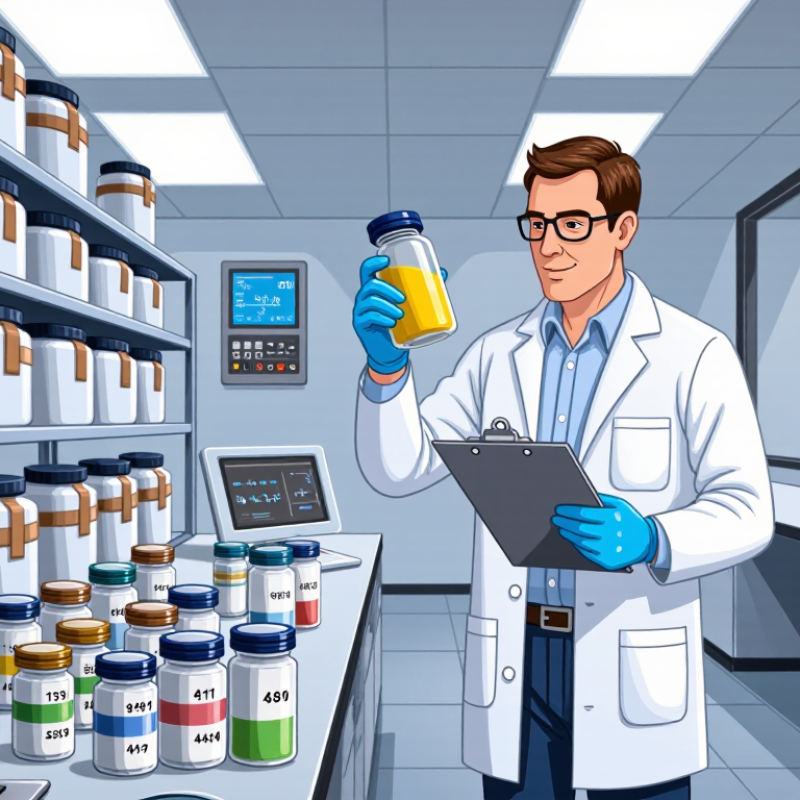
Experience also matters. Visit the supplier’s facility when possible. Look for clean storage rooms, sealed containers, humidity controls, and traceable receiving records. Confirm whether the material is quercetin aglycone, a glycoside, or a formulated complex. These forms are not interchangeable. A supplier should explain the difference clearly.
There is no perfect checklist. Even experienced buyers can overlook a weak point. I would question any supplier that avoids difficult questions. Reliable sourcing is slower than quick purchasing. It may also cost more. Still, transparent records, repeatable testing, and honest communication provide stronger protection than a polished brochure. The goal is not merely to buy Quercetin Bioflavonoids. It is to secure a consistent ingredient that performs as expected.
Quercetin is a naturally occurring plant pigment found in onions, apples, capers, and several leafy vegetables. It belongs to the bioflavonoid family, which is studied for antioxidant activity and cellular protection. People commonly use quercetin supplements to support general wellness, seasonal comfort, and exercise recovery. However, research outcomes can vary, and quercetin is not a guaranteed treatment.
Tip 1: Check the botanical source and manufacturing location.
Tip 2: Request a current certificate of analysis showing identity, purity, and potency.
Tip 3: Look for testing of heavy metals, microbes, and unwanted solvents.
Tip 4: Confirm whether the product contains a standard extract or isolated quercetin. Small differences matter. Absorption may also change with particle size, formulation, and food intake. I would not assume a higher dose always delivers better results.
Tip 5: Choose suppliers with traceable batch records and clear storage instructions.
Tip 6: Review allergen statements and excipient details, especially for sensitive users.
Tip 7: Ask whether independent laboratory testing is available. A reliable supplier should answer without vague promises.
Health professionals should review possible interactions, particularly when someone uses prescription medicines or has a chronic condition.
Quercetin sounds simple, but quality control is not simple. Even experienced buyers can overlook formulation details.
7 Tips for Sourcing Quercetin Bioflavonoids?
Source material determines the final quercetin profile. Ask whether the supplier uses Sophora japonica flower buds, onions, or another botanical source. These materials can differ in quercetin content, moisture, pesticides, and extraction yield. Request the botanical name, plant part, country of origin, and harvest details. Traceability matters.
Review the certificate of analysis carefully. A credible report should show batch number, test date, method, and laboratory identity. HPLC should measure quercetin concentration, not only total flavonoids. That distinction is important. USP General Chapter <561> emphasizes validated identification and quality testing for botanical ingredients. AOAC guidance also supports validated analytical methods for reliable food and supplement measurements. Ask for chromatograms, not just a passing result. A stated 95% assay may describe quercetin glycosides rather than aglycone quercetin.
Check heavy metals, microbial counts, residual solvents, pesticides, and adulterants. Compare results with applicable pharmacopeial or national limits. Independent laboratory verification adds confidence. The 2023 Global Quality Report from the Global Harmonization Initiative stresses documented, risk-based testing across the supply chain. Still, supplier documents are not infallible. I have seen polished certificates with unclear sample identities. Retesting a retained sample is worthwhile. Storage also matters; heat, light, and humidity can gradually reduce quality. Use sealed, opaque packaging and confirm stability data before approving large volumes.
| Tip | Sourcing Dimension | What to Verify | Practical Benchmark or Data Point | Recommended Evidence |
|---|---|---|---|---|
| 1 | Identify the botanical source | Confirm the plant species, plant part, extraction method, and whether the material is a quercetin aglycone or a glycoside-rich extract. | Quercetin is naturally present in sources such as onion skin, apples, berries, tea leaves, and several medicinal plants. Rutin and other quercetin glycosides are chemically related but are not identical to free quercetin. | Botanical identification report, supplier specification, raw-material traceability records, and a validated chromatographic profile. |
| 2 | Define the quercetin form | Check whether the product is quercetin anhydrous, quercetin dihydrate, or a glycoside such as rutin. The form affects molecular weight, assay calculation, and formulation behavior. | Quercetin anhydrous has a molecular weight of approximately 302.24 g/mol; quercetin dihydrate has a molecular weight of approximately 338.27 g/mol. Do not compare assay results without confirming the stated form. | Certificate of analysis, identity test, water or loss-on-drying result, and an explicit declaration of the assay basis. |
| 3 | Set a realistic purity target | Distinguish quercetin assay from total extract ratio, total polyphenols, and total flavonoids. A high extract ratio does not necessarily mean a high quercetin content. | For a purified quercetin ingredient, a procurement target of at least 95% quercetin by validated HPLC or UPLC assay is commonly used. At 95% assay, 1,000 mg of powder contains approximately 950 mg of measured quercetin, subject to the stated assay basis. | Batch-specific chromatogram, validated assay method, reference standard information, acceptance criteria, and results reported as % w/w. |
| 4 | Evaluate the full impurity profile | Review related flavonoids, residual plant constituents, degradation products, residual solvents, pesticides, heavy metals, and undeclared excipients. | The specification should list individual or grouped limits for relevant impurities rather than reporting only a single “purity” number. Residual-solvent limits should align with applicable ICH Q3C or local regulatory requirements. | HPLC or UPLC impurity profile, GC residual-solvent report, pesticide screen, elemental impurities report, and a complete composition statement. |
| 5 | Confirm identity with orthogonal testing | Use more than one analytical approach to distinguish quercetin from structurally related flavonoids and possible adulterants. | A robust identity package commonly combines chromatographic retention time with UV-visible spectral matching; FTIR or mass spectrometry can provide additional confirmation when needed. | HPLC or UPLC identity match against an authenticated reference standard, plus FTIR, UV, or LC-MS confirmation for higher-risk materials. |
| 6 | Check safety and microbiological quality | Verify total aerobic microbial count, yeast and mold, specified pathogens, aflatoxins where applicable, and elemental impurities. Requirements depend on intended use and jurisdiction. | The material should comply with the applicable food, dietary-supplement, cosmetic, or pharmaceutical standard. Acceptance limits must be defined before purchase and should not be replaced by a generic “passes microbiology” statement. | Batch-specific microbiological certificate, pathogen results, heavy-metal or elemental impurities report, allergen statement, and regulatory compliance declaration. |
| 7 | Assess stability and solubility before scaling | Examine moisture sensitivity, light and oxygen exposure, particle size, dissolution behavior, packaging, and retest period. Quercetin has limited water solubility and may require formulation support. | Native quercetin is poorly soluble in water at ambient temperature. Request stability data under the proposed storage conditions and verify assay, appearance, and impurity changes through the stated shelf life. | Accelerated and long-term stability data, dissolution or dispersibility results, particle size distribution, packaging specification, storage instructions, and retest date. |
Note: The benchmarks above are sourcing and quality-control guidelines, not universal legal limits. Final specifications should be adapted to the intended product category, target market, dosage form, and applicable regulations.
Sourcing quercetin bioflavonoids starts with inspecting the supplier’s quality system, not its sales language. Ask for current certifications, written procedures, and the manufacturing site address. A credible supplier should explain raw material origin, extraction method, and every major processing step. Request a recent certificate of analysis for the exact lot you may purchase. It should list identity, assay, moisture, residual solvents, heavy metals, microbes, and test methods. Generic certificates are weak evidence. Look for laboratory names, dates, specifications, and results.
Quality claims need independent checking. Confirm whether testing occurs in-house, externally, or both. An ISO/IEC 17025-accredited laboratory can add confidence, but accreditation should match the relevant methods. Ask for identity confirmation using HPLC, UV, or another validated technique. Review chromatograms when available. Check whether specifications match your intended dosage form and market. This detail is often missed. Request allergen, GMO, irradiation, and contaminant statements where relevant. Do not accept “tested” as a complete answer.
Manufacturing practice becomes clearer during an audit or documented remote review. Examine cleaning records, equipment calibration, deviation handling, change control, and batch traceability. Storage areas should show labeled containers, controlled humidity, and clear quarantine status. I have found small gaps, such as incomplete sampling logs, more revealing than polished presentations. That is not an automatic rejection, but it requires corrective action and follow-up evidence. Retain a pre-shipment sample and compare it with future lots. Supplier performance can drift. Recheck it regularly. Keep the evidence tied to each lot.
When sourcing quercetin bioflavonoids, begin with the testing report. Request a batch-specific certificate of analysis, not a generic sample. Check the lot number, test date, specification, and laboratory signature. Confirm the assay method, such as HPLC, and review the reported quercetin content. A neat PDF is not proof by itself.
Look for identity, purity, microbiological, heavy-metal, pesticide, and residual-solvent results. Ask whether an independent laboratory performed the analysis. Verify the laboratory’s accreditation and testing scope through its official records. Certifications also need careful checking. Confirm the certificate number, issuing body, covered facility, and expiration date. A quality certificate with the wrong site is a warning sign. Very small details matter.
Traceability should follow the material from farm or extraction site to final packaging. Request supplier records, production dates, country of origin, storage conditions, and shipping temperatures. Match every document to the same batch. Keep retained samples when possible. I once saw a report with excellent results but unclear sample ownership; that gap deserved more questions. Do not assume a long supplier history replaces current evidence. Visit the facility, if practical, and compare written procedures with actual handling. Trust grows through records, repeat testing, and transparent answers, not confident promises.
Comparing Pricing, Packaging, Storage, and Long-Term Supply Terms
Tip 1: Compare prices by active quercetin content, not kilograms alone. A cheaper powder may contain lower potency or require additional testing. Request recent certificates of analysis, identity results, assay values, and microbial reports.
Tip 2: Check packaging carefully. Moisture-barrier bags inside sealed fiber drums can protect the powder during transport. Confirm net weight, lot numbers, production dates, and tamper evidence before approval.
Tip 3: Ask how the material is stored. Quercetin bioflavonoids generally need a cool, dry, dark area, away from heat and humidity.
Tip 4: Review the supplier’s warehouse controls, including temperature records and stock rotation. Small details matter. I have seen purchasing teams overlook opened containers, then question an unexpected color change later. That mistake is avoidable, although storage instructions are sometimes less clear than they should be.
Tip 5: Compare lead times across normal and urgent orders.
Tip 6: Negotiate long-term terms that define minimum order quantities, price-review dates, delivery windows, and replacement procedures. Avoid agreements based only on verbal promises.
Tip 7: Ask whether supply depends on one harvest, one processor, or one transport route. A stable contract can still fail during shortages. Consider a qualified backup source, but do not approve it without equivalent testing. Pricing, packaging, storage, and supply terms should be reviewed together, because a low unit cost may become expensive after delays, waste, or retesting.
It should show the lot number, test date, specification, laboratory signature, and reported quercetin content. A neat PDF proves little.
Check identity, purity, microbiological limits, heavy metals, pesticides, and residual solvents. Ask about the assay method, such as HPLC.
Verify its accreditation, official records, and testing scope. Independent testing adds useful distance.
Confirm the certificate number, issuing body, covered facility, and expiration date. A wrong facility name is a warning sign.
Records should connect the material from extraction or farming through final packaging. Match every document to the same batch.
Check moisture-barrier bags, sealed fiber drums, net weight, lot numbers, production dates, and tamper evidence. Small labels matter.
Keep the powder in a cool, dry, dark area away from heat and humidity. Review warehouse temperature records and stock rotation.
Compare active quercetin content, testing costs, lead times, delivery windows, and replacement procedures. Cheap powder may cost more later.
Specify minimum order quantities, price-review dates, delivery windows, and procedures for rejected or replaced material. Verbal promises are too weak.
Not always. Supply may depend on one harvest, processor, or transport route. A backup source still needs equivalent testing.
Sourcing Quercetin Bioflavonoids requires a structured approach that balances product quality, consistency, and supply reliability. Begin by understanding the intended use and selecting suitable source materials, while reviewing quercetin concentration, purity, appearance, and formulation requirements. A clear specification can help prevent quality variations and ensure the ingredient matches the needs of the final product.
Next, evaluate each supplier’s quality standards, manufacturing practices, and documentation. Request recent laboratory testing reports, certifications, batch records, and traceability information to confirm identity, strength, and contaminant control. It is also important to compare pricing alongside packaging quality, storage conditions, shelf life, minimum order quantities, and lead times. Discussing long-term supply terms, quality agreements, and communication procedures in advance can reduce disruptions and improve purchasing decisions. By reviewing these factors together rather than focusing only on price, buyers can establish a more dependable sourcing process for Quercetin Bioflavonoids.
